

Welcome to the Department of Humanities, Philosophy and Religion (HPR)
“Knowledge” and “World Views” courses together constitute the introductory or 100-level component of Humanities courses which are concerned with the most basic and general aspects of being human. These courses provide the background to the 200-level course on “Ethical Issues.”
The focus of study in Knowledge courses may be any appropriate field of knowledge. An appropriate field can be any serious body of knowledge relating to education, law, psychology, creativity, social behaviour, or other disciplines. Humanities courses approach each from an interdisciplinary perspective.
World views are understandings of reality shared by groups or societies defined or self-defined on the basis of common geography, economic status, gender, sexual orientation, ideology, history, religion, spirituality, political values, psychology, language, culture, (dis)ability, etc.
Ethical issues are understood to be questions of social and moral significance approached from a perspective that examines questions of valuing and the notions of good and bad. “Ethical Issues” courses are not meant to be introductions to ethical codes but rather to allow students to examine important questions of human morality as they relate to their respective fields of study and to apply an authentic critical thought process to the resolution of these issues.
Members of the Department
List of Faculty Members
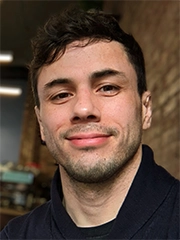
![Awan, Fareed : [he/him] Co-chair](https://departments.johnabbott.qc.ca/wp-content/uploads/2025/12/Awan.webp)
Awan, Fareed
[he/him] Co-chair514-457-6610 ext. 5172
HA-211
fareed.awan@johnabbott.qc.ca
B.A. Lehigh University (Honors Philosophy)
M.A. University of Washington (Philosophy)
Ph.D. University of Washington (Philosophy)
I am a political philosopher and bioethicist by training, and came to Montréal as a post-doctoral research fellow at McGill University on issues of global health, exploitation, and research ethics. At John Abbott, I draw on my liberal arts education and varied teaching experience (from secondary to graduate levels) to make difficult questions engaging and alive. Outside of class, my interests are in developing my cooking, squash (the sport), and espresso making skills.
![Browne, Meredith : [she]](https://departments.johnabbott.qc.ca/wp-content/uploads/2026/01/Meredith-Browne.png)
Browne, Meredith
[she]514-457-6610 ext. 5140
HA-105
meredith.brown@johnabbott.qc.ca
![Claude, Stephanie : [she/her] Women’s Studies and Gender Relations (WSGR) Certificate Coordinator](https://departments.johnabbott.qc.ca/wp-content/uploads/2018/09/silouette-1.jpg)
Claude, Stephanie
[she/her] Women’s Studies and Gender Relations (WSGR) Certificate Coordinator514-457-6610 ext. 5462
Stephanie.Claude@johnabbott.qc.ca
M.Ed., McGill University (Counselling Psychology
Ph.D. University of Ottawa (Feminist and Gender Studies)
My research and academic work expose the ever-present dynamics of settler colonialism, white supremacy, and patriarchy and the complex ways they shape the lived experiences of those living in Canada. I pay particular attention to the role that settler Canadians play in maintaining systems of colonial violence and injustice as well as our responsibility to disrupt these systems.
![Cockburn, Jenny : [she/her]](https://departments.johnabbott.qc.ca/wp-content/uploads/2025/12/Cockburn.webp)
Cockburn, Jenny
[she/her]514-457-6610 ext. 5486
HA-109
jenny.cockburn@johnabbott.qc.ca
M.A. Concordia (Anthropology)
Ph.D. University of Windsor (Sociology: Social Justice)
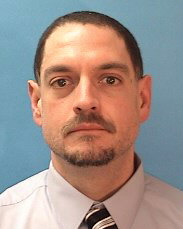
Daniel-Hughes, Brandon
HA-102
brandon.daniel-hughes@johnabbott.qc.ca
B.A. Transylvania University
M.Div. Harvard University
Ph.D. Boston University
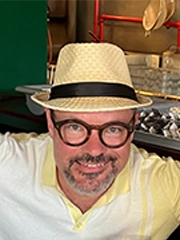
Hamer, John Faithful
514-457-6610 ext. 5162
HA-213
john.hamer@johnabbott.qc.ca
B.A. Concordia University (History)
M.A. Johns Hopkins University (History)
PhD Johns Hopkins University (History)
John Faithful Hamer still doesn’t know how to swim or drive, and his sense of direction is notoriously unreliable, yet he’d love to tell you where to go. His lack of practical skills is astounding, and his inability to fix things is renowned, yet he’d love to tell you what to do. His mismanagement of time is legendary, as is his inability to remember appointments, yet he fancies himself a philosopher and would love to tell you how to live. He wouldn’t survive in a state of nature, of that we can be sure; but he’s doing quite well in the big city, which has always been a refuge for the ridiculous, a haven for the helpless, and a friend to the frivolous.
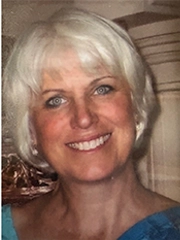
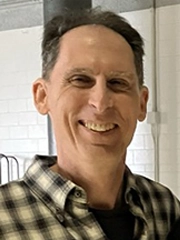
Laferrière, Eric
Co-chair / Sports Studies Certificate Coordinator514-457-6610 ext. 5178
HA-104
eric.laferriere@johnabbott.qc.ca
Ph.D. McGill University (Political Science)
Eric has taught Humanities and Philosophy at John Abbott since 1996. His initial interests pertained to ecological thought and theories of international relations, teaching courses in modern philosophy, political theory and environmental ethics. He has since developed a sustained interest in the philosophy and history of sport. He became HPR co-coordinator in 1999 and coordinated the Liberal Arts program for thirteen years. He founded the college-wide Sports Studies Certificate in 2022. He is a passionate advocate of women's right to play, co-founding a province-wide baseball league for girls and women in 2021.
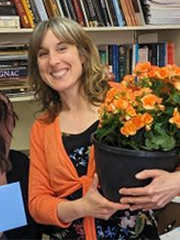
Larose, Avery
Liberal Arts Program Coordinator514-457-6610 ext. 5185
HA-212
avery.larose@johnabbott.qc.ca
D.E.C. John Abbott College (Liberal Arts)
B.A. McGill University (Art History)
M.A. Concordia University (Art History)
Avery is the coordinator of the Liberal Arts program, and loves to teach classes that explore the connections between art, ideas, and the human condition.
![Maisonville, Derek : [he/him/his/they/them/theirs]](https://departments.johnabbott.qc.ca/wp-content/uploads/2016/02/P00013354-Derek-Maisonville-HPR.jpg)
Maisonville, Derek
[he/him/his/they/them/theirs]514-457-6610 ext. 5495
HA-113
derek.maisonville@johnabbott.qc.ca
B.A. York University (Political Science)
M.A. McMaster University (Political Science)
ABD Ph.D. York University (Political Science)
Derek teaches classes on colonialism, race and gender, Indigeneity, state (and non-state) violence. Derek enjoys popular culture, the Toronto Blue Jays, March Madness, foraging for fungi, beading, painting miniatures, the Oxford comma, opposing fascism, and talking about himself in the third person.
![Massimi, Ful : [they/them/iel]](https://departments.johnabbott.qc.ca/wp-content/uploads/2025/12/Massimi.webp)
Massimi, Ful
[they/them/iel]HA-209
Ful.Massimi@johnabbott.qc.ca
B.A. University of Rome La Sapienza (Performing Arts and Sciences)
M.A. University of Bologna (Cinema, Television, and Multimedia Production)
Ph.D. Concordia University (Film and Moving Image Studies)
![Rhymes, John : [he/him]](https://departments.johnabbott.qc.ca/wp-content/uploads/2025/12/Rhymes.webp)
Rhymes, John
[he/him]john.rhymes@johnabbott.qc.ca
D.E.C. Dawson College (International Business Studies)
B.A. The University of King's College (Philosophy, History)
M.A. Dalhousie University (Philosophy)
Drawing on work in feminist relational autonomy theory, social epistemology, and ethics in AI, my research focuses on how algorithms influence our behaviour, morals, and beliefs nonautonomously; how does AI make us think, act, behave, and believe in inauthentic, unfree ways? While my research specifically focuses on recommender systems in digital media, I am currently conducting similar investigations in generative AI.
Trained in Philosophy at Dalhousie University and The University of King’s College, I started teaching at JAC in 2025, and love my job more than anything I’ve ever done. When I’m not golfing, fishing, cooking, reading, or watching the Canadiens play, I’m probably staring at the ceiling thinking about the intricacies of some weird question for which I’m highly unqualified to answer—like whether the current state of quantum research suggests that time is a linear experience or a circular phenomenon… I have no idea!
Riverin, Maude
[she/her/elle]maude.riverin@johnabbott.qc.ca
D.E.C Cégep de Saint-Laurent (Cinema)
B.A. Université de Montréal (Film Studies and Comparative Literature)
M.A. Concordia University (Film Studies)
Ph.D. Université du Québec à Montréal (Communication)
![Rodríguez, Gregorio : [he/they]](https://departments.johnabbott.qc.ca/wp-content/uploads/2025/12/Rodriguez.webp)
Rodríguez, Gregorio
[he/they]514-457-6610 ext. 5169
HA-211
gregory.rodriguez@johnabbott.qc.ca
B.A. Eugene Lang College - The New School (Cultural and Media Studies)
PGDip University of Amsterdam (Sexual Health Policy)
M.A. Sarah Lawrence College (History / Women's and Gender Studies)
Ph.D. Concordia University (Cultural Studies)
Dr. Gregorio Rodríguez (he/they) holds a PhD in Cultural Studies from Concordia University. His recent work appears in Concordia at 50: A Collective History (2025), and he curates film programs on/with queer (of colour) communities in Montréal, New York City, and Amsterdam. Originally from The Bronx (NYC), Gregorio now resides in Tiohtià:ke/Montréal and is a Humanities professor at John Abbott College, where he teaches courses in global cultural and media studies, postcolonialism and race/gender/sexuality, and the intellectual history of science and technology.
S. Nicolas, Darien
514-457-6610 ext. 5193
HA-209
darien.nicolas@johnabbott.qc.ca
M.A. El Colegio de México (African Studies)
Ph.D. Concordia University (Film and Moving Image Studies)
Darien Sánchez Nicolás, PhD. is an instructor in the Humanities, Philosophies and Religions department at John Abbott College. He got a doctorate in Film and Moving Image Studies from the Mel Hoppenheim School of Cinema of Concordia University. He was a postdoctoral fellow at Queen’s University’s Vulnerable Media Lab and has also worked as film pre-screener and programmer for the Toronto International Film Festival, Latinarte Festival and the South Asian International Film Festival of Montréal, amongst others.
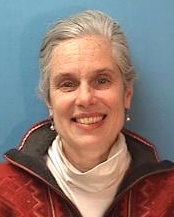

Tiflati, Hicham, A
HA-209
hicham.tiflati@johnabbott.qc.ca
B.A. Al-Qaraoueen University (Islamic Law)
M.A. Johnson and Wales University (Secondary Special Education)
Ph.D. UQAM (Religious Studies)
I am an academic, researcher, and professor specializing in religion, politics, and secularism, with a focus on radicalization, Muslim identities, and Islamic schooling. With over a decade of experience, he has examined issues affecting Muslim youth in the West, and has done field work in Quebec, Canada, Morocco, Germany, Turkey, and the USA. His scholarship critically explores Muslim representations and the media and academia’s role in discussions on religion, politics, and social justice.
Google Scholar: https://scholar.google.com.my/citations?user=Fg0tsowAAAAJ&hl=en
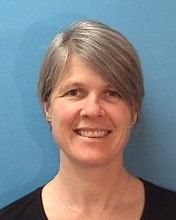
Viqar, Sarwat
Co-chair / Peace Studies Certificate Coordinator514-457-6610 ext. 5177
HA-204
sarwat.viqar@johnabbott.qc.ca
Courses
Humanities, as part of the general education component, is intended to promote personal and social development and to give students a foundation that will help them understand their roles in contemporary society as members of the work force, citizens and individuals. The three sets of objectives and standards in humanities propose common frameworks for understanding the experiences, ideas and values of humankind and their diversity. They are aimed at developing critical thinking, reinforcing the ancillary skills involved in careful reading, organized writing, and well-developed oral presentations, and, where appropriate, improving media and computer literacy. Once students have mastered the three-stage process of analysis, synthesis and evaluation, they will be able to reflect in an informed manner and to communicate what they have learned in an organized and coherent fashion.
For a detailed course offering, please visit the General Education (Humanities) section of the Program Planner.
Supplemental Information
All cegep-level programs aim to “educate students to live responsibly in society”, “help students integrate cultural knowledge into their studies”, and “help students master language as a tool for thought, communication and openness to the world”. This involves the development of numerous skills, or “competencies”, such as problem-solving abilities, the use of creativity, the ability to adapt to new situations, the ability to exercise a sense of responsibility, and to communicate. According to the ministerial devis, students who have achieved the general education objectives in humanities:
– will be able to demonstrate their knowledge of the following:
- the main concepts, limits and uses of a form of knowledge including significant historical reference points
- the main concepts, limits and uses of a world view
- the nature and organization of the basic elements of an ethical question
- methods for coherent integration of concepts and the formulation and synthesis of ideas
- the importance and practice of adequately substantiated argumentation, written and oral
– will be able to demonstrate their ability to do the following:
- describe, explain and organize the main elements, ideas, values and implications of a world view in a coherent fashion
- compare world views
- recognize the basic elements in a specific example of the organization, transmission, and use of knowledge
- recognize forms of creativity and original thought
- define the dimensions, limits and uses of knowledge in appropriate historical contexts
- identify, organize and synthesize the salient elements of a particular example of knowledge
- situate important ethical and social issues in their appropriate historical and intellectual contexts
- explain, analyze and debate ethical issues in a personal and professional context
- utilize the multiple strategies of critical thinking
– will be encouraged to develop the following attitudes:
- openness to diversity and pluralism
- awareness of the limits of knowledge claims, world views and ethical perspectives
- respect for the points of view of others
- empathy and acceptance of others
- concern for global issues
- determination to continue learning